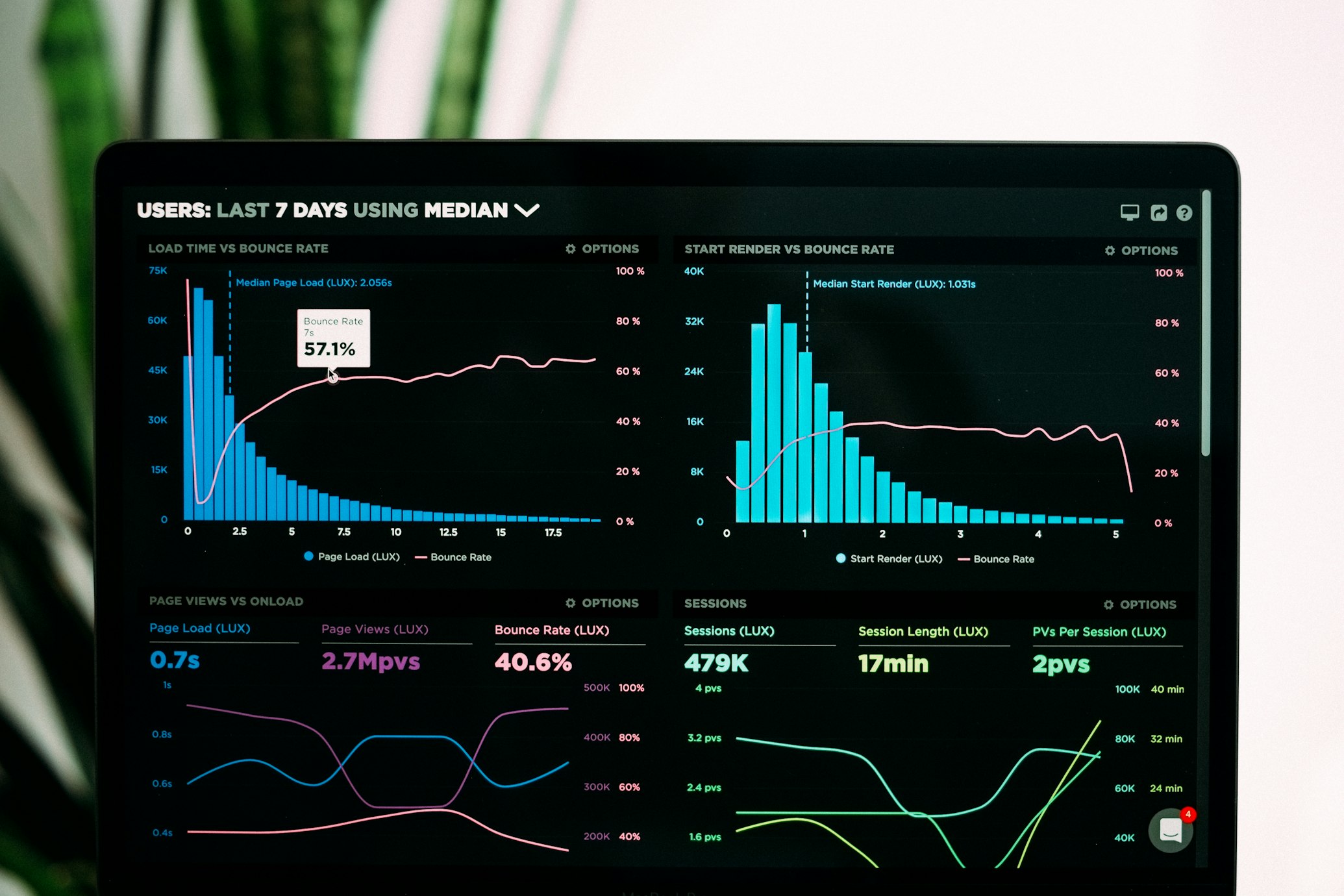
In 2026, data has cemented itself as the lifeblood of the global digital economy. Every tap on a smartphone, every financial transaction, and every cloud interaction generates a stream of digital telemetry. Yet, data in its raw state is useless. To extract value from this ocean of information, companies rely on two critical, distinct technical professionals: the AI Engineer and the Data Analyst. As students and tech professionals evaluate their futures, the debate over AI Engineer vs Data Analyst has become central to choosing the best career in AI and data technologies.
Choosing between these paths requires looking beyond simple buzzwords. While both roles work closely with data, they do so with completely different objectives, skill sets, and cognitive requirements. AI engineering is a software building discipline focused on creating autonomous, predictive cognitive pipelines. Data analytics is a business intelligence discipline focused on translating past performance statistics into forward-looking corporate strategies. This comprehensive guide provides a deep-dive comparison into the AI career vs Data Analytics landscape, detailing salaries (including a Data Analyst vs AI Engineer salary comparison), step-by-step roadmaps, long-term trends for AI jobs in India, and how the cognitive profiling engine at Digital Twin Verse helps you find your perfect career match.
1. Who is an AI Engineer?
An AI Engineer is a specialized systems engineer who designs, builds, and deploys software systems powered by machine learning models. Their primary objective is to build applications that can reason, predict, and automate tasks autonomously.
Rather than researching new mathematical algorithms (the domain of AI Research Scientists), AI Engineers focus on application architecture. They build retrieval-augmented generation (RAG) pipelines, integrate large language models (LLMs) via APIs, manage context vectors, and fine-tune models on proprietary data. Their work is code-heavy and focused on creating functional, scalable software products that interact dynamically with users and databases.
2. Who is a Data Analyst?
A Data Analyst is a business intelligence specialist responsible for collecting, cleaning, analyzing, and visualizing complex datasets to help organizations make informed decisions. Their primary objective is to answer business questions using historical data.
Instead of building autonomous software agents, a Data Analyst acts as an investigator. They write advanced SQL queries, clean messy raw telemetry, perform statistical analyses, and build interactive dashboards (using PowerBI or Tableau) to track key performance indicators (KPIs). Their day-to-day work focuses on translating raw numbers into reports that tell a clear story to executive leaders, helping them optimize pricing, improve marketing, or reduce operational waste.
3. Key Differences: AI Engineer vs Data Analyst
To understand which path fits your natural logical style, it is helpful to contrast their core characteristics side-by-side:
| Feature | AI Engineer | Data Analyst |
|---|---|---|
| Primary Objective | Build systems that automate reasoning and predict future outputs autonomously. | Analyze past and present data to extract actionable insights for human decision-makers. |
| Focus of Analysis | Model performance, inference accuracy, token counts, and vector similarity scores. | Business KPIs, market trends, user behavior patterns, and operational efficiency metrics. |
| Coding Intensity | High (Advanced Python, software design patterns, APIs, system integrations). | Medium (Structured SQL queries, data manipulation in Python/R, dashboard scripts). |
| Primary Toolset | Python, PyTorch, LangChain, vector DBs (Pinecone, pgvector), Docker, HuggingFace. | SQL, PowerBI, Tableau, Microsoft Excel, Google Sheets, Python (Pandas/Matplotlib). |
| Math & Stats Depth | High (Matrix calculus, probability, linear algebra, neural network architectures). | Medium (Descriptive statistics, hypothesis testing, A/B testing, regression analysis). |
| Core Audience | Software platforms, automated pipelines, and application developers. | Business executives, product managers, marketing teams, and corporate leaders. |
4. Skills Comparison & In-Demand AI Skills
Both careers require familiarity with data, but the tools and methodologies differ significantly:
AI Engineering Skill Stack:
- Software Development: Advanced Python coding, understanding of API design (REST, GraphQL), software testing, and version control (Git).
- Model Orchestration: Building complex applications using LangChain, LlamaIndex, or AutoGen to connect LLMs to external memory and search engines.
- Vector Database Management: Understanding embeddings and setting up vector indexes in databases like Pinecone, Milvus, or pgvector.
- MLOps & Deployment: Packaging models in Docker containers, orchestrating deployments on Kubernetes, and managing cloud environments on AWS or GCP.
Data Analyst Skill Stack:
- Advanced SQL: The baseline skill. Analysts must write complex queries involving multi-table JOINs, subqueries, and window functions to extract data.
- Business Intelligence (BI) Tools: Developing interactive, user-friendly dashboards in PowerBI, Tableau, or Looker Studio.
- Data Wrangling: Cleaning and preparing messy, missing, or corrupt datasets using Excel or Python libraries like Pandas.
- Data Visualization & Storytelling: Crafting visual charts that make complex trends obvious to non-technical business stakeholders.
5. Data Analyst vs AI Engineer Salary (India 2026)
AI engineering represents a highly technical engineering discipline with high entry barriers, resulting in higher average salaries across all experience levels. Data Analyst roles offer a faster entry point but have a slightly lower initial salary, though senior analytics managers command excellent pay. Here is the realistic trajectory in India for 2026:
| Experience Level | AI Engineer Salary (INR / Year) | Data Analyst Salary (INR / Year) | Growth Prerequisite |
|---|---|---|---|
| Entry-Level (0–2 years) | ₹7,00,000 – ₹14,00,000 | ₹4,50,000 – ₹8,00,000 | Strong portfolio projects (GitHub/BI Dashboards) and internship experience. |
| Mid-Level (3–6 years) | ₹18,00,000 – ₹35,00,000 | ₹9,00,000 – ₹16,00,000 | Scale experience, system design mastery, advanced statistical modeling. |
| Senior / Architect (7+ years) | ₹40,00,000 – ₹80,00,000+ | ₹20,00,000 – ₹40,00,000+ | Strategic business alignment, leadership, and team management capabilities. |
6. Career Growth & Future Scope
The demand for both roles in India is growing rapidly. However, the rise of AI agents is transforming the daily work of Data Analysts. Generative AI tools can now write basic SQL code and generate simple charts automatically. This does not mean Data Analysts are obsolete; it means the role has evolved.
A Data Analyst in 2026 no longer spends hours formatting spreadsheets. Instead, they act as strategic advisors, interpreting the data trends generated by AI and helping executives make high-stakes business choices. Meanwhile, the demand for AI Engineers is booming as companies seek to build and integrate these AI engines internally. AI jobs in India are projected to grow by over 30% annually, making it one of the most secure fields for the next decade.
7. Which Career Should Students Choose?
Deciding between these paths depends on your cognitive alignment and professional preferences:
Choose AI Engineering if:
- You enjoy writing code, configuring servers, and building software systems (builder mindset).
- You love mathematics, algorithms, probability, and neural networks.
- You are fascinated by automated systems, chatbots, and autonomous agents.
Choose Data Analytics if:
- You enjoy solving business problems and advising strategies (consultant mindset).
- You like finding patterns in numbers and translating them into clear stories.
- You prefer working with business metrics, sales telemetry, and visual charts.
8. Required Learning Roadmaps & Recommended AI Certifications
If you are ready to start your journey, here are the structured paths for both careers in 2026:
12-Month Data Analyst Roadmap:
- Months 1–3: SQL & Excel Foundations — Master Excel functions, Pivot tables, and learn basic-to-advanced SQL (filtering, grouping, joins, CTEs).
- Months 4–6: Business Intelligence Tools — Learn PowerBI or Tableau. Learn how to import data, design relational data models, and build interactive dashboards.
- Months 7–9: Python for Data Analysis — Learn basic Python syntax and libraries like Pandas, Matplotlib, and Seaborn for data cleaning and visualization.
- Months 10–12: Statistics & Portfolio — Learn descriptive statistics, hypothesis testing, and build 3 comprehensive projects on GitHub/NovyPro.
12-Month AI Engineer Roadmap:
- Months 1–3: Advanced Python & Software Basics — Master object-oriented programming in Python, Git version control, and data structures.
- Months 4–6: Math, Stats & Machine Learning APIs — Study linear algebra, probability, and learn how to use machine learning libraries (Scikit-Learn).
- Months 7–9: LLMs, APIs & RAG Pipelines — Master prompt engineering, LangChain, LlamaIndex, and vector databases (Pinecone, Chroma).
- Months 10–12: Containerization & MLOps — Learn Docker, Kubernetes, model tracking (MLflow), and deploy AI systems to AWS or GCP.
9. Common Myths Debunked
- Myth 1: Data Analytics is a dead end because of AI — False. AI can write code, but it lacks the contextual business understanding to make strategic decisions. Human analysts are more valuable than ever.
- Myth 2: You need a PhD to be an AI Engineer — False. AI Engineers integrate existing models; they do not research new algorithms. A strong software engineering background is what is required.
- Myth 3: SQL is obsolete — False. SQL remains the standard language for accessing data in almost every modern enterprise, regardless of AI integrations.
10. How Digital Twin Verse Helps You Choose
Choosing between an AI Engineering path and a Data Analytics path is a major career decision. Making the wrong choice based on hype rather than your actual logical styles can lead to career friction and demotivation. This is where Digital Twin Verse eliminates the uncertainty.
Our platform uses advanced cognitive profiling and logical assessments to build your "Digital Twin"—an interactive virtual replica of your skills, logical styles, and capabilities.
By simulating your twin across both careers, we analyze your strengths: do you possess the builder logic required for software design (suited for AI engineering) or do you excel in pattern identification and business storytelling (suited for data analytics)? Once mapped, you can explore our virtual sandboxes to experience both roles in a risk-free environment—building dashboard pipelines or deploying RAG architectures—to discover what you truly enjoy building before making academic choices.
To explore more about related careers, read our 2026 Data Scientist roadmap, check out our guide on AI Engineer vs Software Engineer, or review our comprehensive guide on top career options after graduation.
11. Conclusion
Both AI Engineering and Data Analytics are high-paying, high-growth career tracks in 2026. AI Engineering is the ideal path for software builders who want to engineer autonomous systems. Data Analytics is the ideal path for analytical problem solvers who want to translate numbers into business strategies.
Identify your natural cognitive strengths, build practical portfolios, and leverage platforms like Digital Twin Verse to find your perfect logical fit and launch your career with confidence.
Unsure Which Data Career Fits You?
Create your Digital Twin today, test-drive real-world AI and Data Analyst tasks in our virtual simulations, and unlock your personalized learning roadmap.
Create Your Digital Twin NowFrequently Asked Questions
What is the difference between an AI Engineer and a Data Analyst?
An AI Engineer builds systems, tools, and models that predict and automate reasoning autonomously (focus on engineering). A Data Analyst extracts, cleans, and translates historical data into business intelligence and dashboards (focus on analysis and insights).
Who earns more, an AI Engineer or a Data Analyst in India?
In 2026, AI Engineers command higher starting salaries (₹7L - ₹14L per annum) compared to Data Analysts (₹4.5L - ₹8L). Senior AI architects can earn ₹40L - ₹80L+, while senior analytics managers earn around ₹20L - ₹40L+.
Will AI replace Data Analysts?
No. While generative AI can write basic SQL and make charts, human analysts are vital to understanding the business context, formulating strategic questions, and explaining data trends to management.
Can a Data Analyst transition into an AI Engineer?
Yes. Data Analysts already understand statistics, SQL, and data preparation. By learning advanced Python, deep learning APIs, model quantization, and RAG architectures, they can transition successfully.
What programming languages are needed for these roles?
AI Engineers need advanced Python (PyTorch, LangChain). Data Analysts need advanced SQL and basic-to-mid level Python (Pandas) or R.
Which role requires more math?
AI engineering requires a deeper grasp of probability, linear algebra, calculus, and neural network math. Data Analytics requires a solid understanding of descriptive statistics and hypothesis testing.
Are there entry-level AI jobs in India?
Yes, many startups and enterprise product teams in Bangalore, Hyderabad, and Pune are actively hiring junior AI engineers to integrate model APIs and build prompt-driven applications.
What is a vector database?
A vector database is a specialized database designed to store and query high-dimensional vector embeddings, which represent the semantic meaning of data like text, images, or audio.
Which career path is easier to start?
Data Analytics generally has a lower entry barrier, as mastering SQL and PowerBI/Tableau is faster than learning software engineering, APIs, and cloud deployments required for AI engineering.
How does Digital Twin Verse support career choices?
Digital Twin Verse uses cognitive and behavioral profiles to map your strengths. It runs simulations to help you experience both roles before deciding on an academic path.