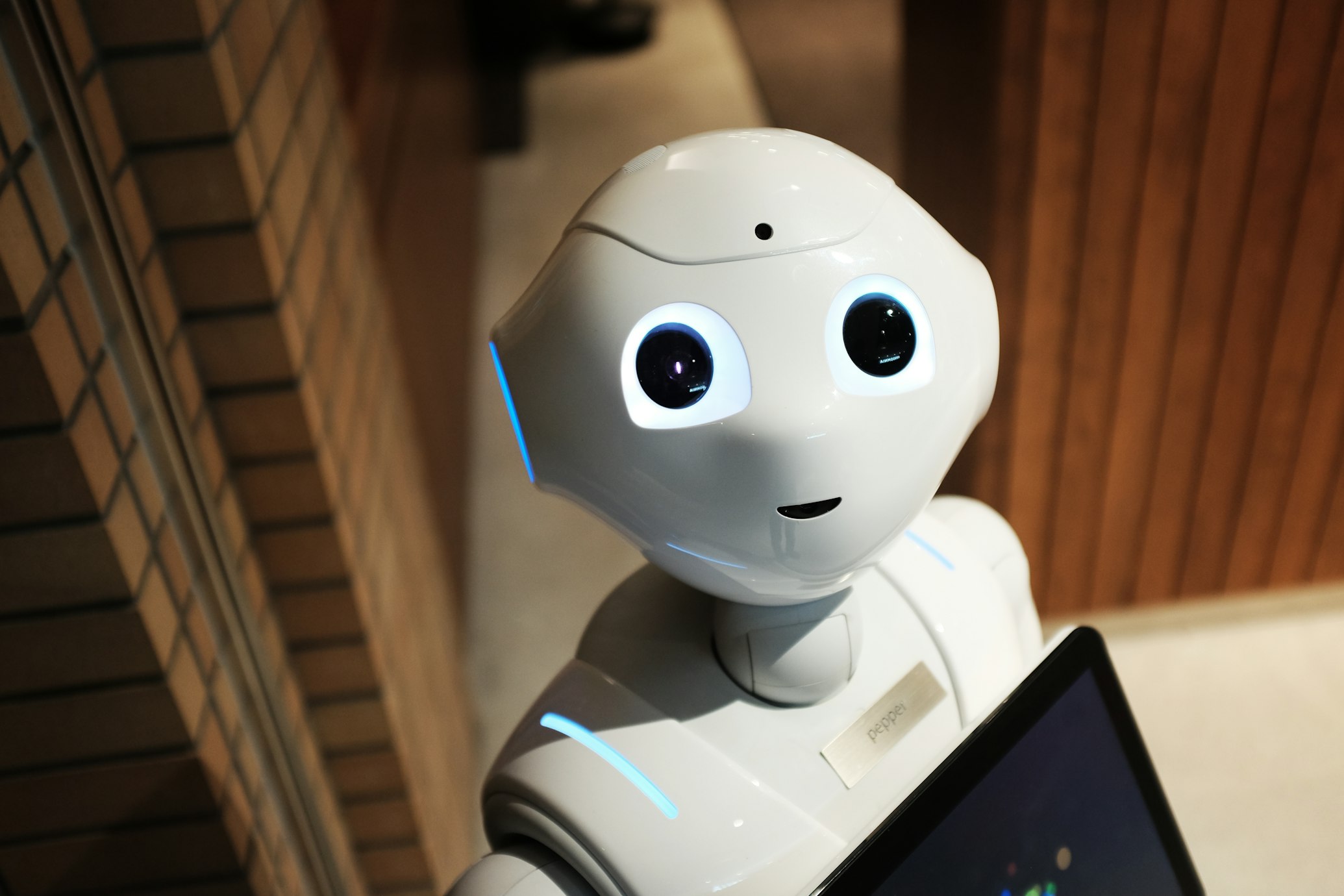
As we navigate through 2026, the educational landscape is experiencing a tectonic shift, moving rapidly away from the rigid, one-size-fits-all model of the industrial age toward a highly dynamic, hyper-personalized ecosystem. This paradigm shift is entirely driven by the integration of emerging technologies. For students, educators, and institutions, simply digitizing textbooks or offering recorded lectures is no longer sufficient. The new standard involves creating intelligent, immersive, and highly adaptive learning environments that respond in real-time to a student’s unique cognitive profile.
In this comprehensive guide, we will explore the profound impact of emerging technologies in education, with a specific focus on Artificial Intelligence (AI), Digital Twins, and Immersive Virtual Reality (VR). We will dissect how these technologies are not just altering the way information is delivered, but fundamentally rewiring how students learn, retain knowledge, and prepare for a fast-evolving career landscape. Whether you are a high school student planning your college trajectory, a university student aiming for a high-growth career, or an educator seeking to understand the future of the classroom, this deep dive provides the actionable insights required to thrive in the modern educational paradigm.
What is Emerging Technology in Education?
Emerging technology in education refers to the deployment of next-generation digital tools designed to optimize the learning process, improve student engagement, and bridge the gap between academic theory and practical, real-world application. While the early 2000s were defined by the introduction of the internet and basic learning management systems (LMS), the current era is defined by intelligence, simulation, and complete personalization.
These technologies are categorized not just by their novelty, but by their capacity to scale personalized tutoring, simulate complex environments safely, and provide granular data analytics regarding student performance. They remove the geographical and economic barriers that historically limited access to elite education, democratizing high-level cognitive training for anyone with an internet connection. The focus has shifted from "information access" to "information synthesis and application."
Core Pillar 1: Artificial Intelligence and Adaptive Learning
Artificial Intelligence remains the foundational pillar of modern educational technology. Its integration goes far beyond simple chatbots or automated grading systems. In 2026, AI in education represents a continuous, adaptive engine that powers the entire learning lifecycle.
Generative AI as a Collaborative Partner
Generative AI models have evolved from novel text generators into sophisticated collaborative partners. Instead of merely providing answers, modern educational AI is programmed using Socratic methods. When a student struggles with a complex calculus problem or struggles to structure a historical essay, the AI does not write the essay for them. Instead, it asks guiding questions, points out logical fallacies, and suggests alternative frameworks. This promotes critical thinking rather than passive reliance. Students learn how to prompt, how to iterate, and how to validate information—skills that are paramount in the modern workforce.
Adaptive Learning Algorithms
The most significant contribution of AI to education is the realization of true adaptive learning. Traditional classrooms force thirty students to move at the exact same pace. Adaptive algorithms monitor a student's interactions in real-time—analyzing not just whether an answer is correct, but the time taken to answer, the types of errors made, and the specific concepts that trigger confusion. The algorithm then dynamically rewrites the curriculum. If a student demonstrates immediate mastery of algebraic factoring, the system accelerates them to polynomials. If they struggle with fractions, the system generates targeted micro-lessons to solidify that foundation before moving forward. This ensures that a student is always operating in their optimal "zone of proximal development."
Predictive Analytics for Dropout Prevention
At the institutional level, AI-driven predictive analytics analyze hundreds of data points—from attendance and assignment submission times to forum participation—to identify students who are at risk of falling behind or dropping out, often weeks before the human instructor notices a problem. This allows for proactive intervention, ensuring students receive the counseling and academic support they need before the situation becomes unrecoverable.
Core Pillar 2: Digital Twins in Education
While AI provides the intelligence, the concept of the Digital Twin provides the framework for holistic student development. Originally utilized in aerospace and advanced manufacturing to create virtual replicas of physical engines or factories, the concept has been successfully adapted to human cognitive development and educational environments.
The Student Digital Twin
A Student Digital Twin is a comprehensive, continuously updating virtual representation of a learner's academic profile, cognitive strengths, behavioral traits, and career aspirations. Unlike a static transcript or a standard resume, a digital twin is dynamic. As a student completes a project, learns a new programming language, or demonstrates leadership in a team simulation, their digital twin updates in real-time.
This allows for unprecedented career matching. By comparing a student's digital twin against the required skill profiles (the "professional twins") of specific careers—such as a Data Scientist, a Cloud Architect, or a Biotech Researcher—the system can instantly identify skill gaps. It then generates a highly specific, personalized roadmap detailing exactly which courses, certifications, and projects the student needs to undertake to bridge that gap. This eliminates the guesswork from career planning.
Virtual Campus and Laboratory Twins
Beyond individual students, universities are creating digital twins of their entire campuses and specialized laboratories. A digital twin of an advanced chemistry lab allows students to run thousands of simulated experiments, mixing highly volatile virtual compounds to observe reactions without any physical danger or material cost. Engineering students can interact with the digital twin of a functioning jet engine, dissecting it component by component in a virtual space, gaining practical understanding that textbooks simply cannot convey.
Core Pillar 3: Immersive Learning via VR and AR
Virtual Reality (VR) and Augmented Reality (AR) have transitioned from gaming novelties to essential educational tools, fundamentally altering how students interact with complex spatial and historical information.
Contextual and Experiential Learning
Human beings are naturally spatial learners. Reading about the circulatory system in a biology textbook requires the brain to translate flat, 2D text into a 3D mental model—a cognitively taxing process. VR eliminates this friction. Medical students can literally walk through a scaled-up virtual human heart, observing the function of valves and blood flow in real-time. History students don't just read about ancient Rome; they put on a headset and stand in the middle of a digitally reconstructed Colosseum, experiencing the scale and architecture firsthand. This level of experiential learning drastically improves knowledge retention and deepens conceptual understanding.
AR for Real-Time Guidance
Augmented Reality overlays digital information onto the physical world. In vocational training and engineering, AR is revolutionary. A student learning to repair a complex piece of machinery can wear AR glasses that highlight the exact bolts to remove, overlaying step-by-step schematics directly onto their field of vision. This hands-on, guided approach accelerates skill acquisition and builds immediate muscle memory.
Real-World Student Scenarios & Workflows
To move beyond theory, let us examine exactly how a student in 2026 utilizes these emerging technologies in their daily academic workflow.
Scenario 1: The High School Senior Preparing for Engineering
The Challenge: Rahul is a 12th-grade student who wants to pursue Robotics Engineering, but his high school only offers basic physics and computer science. He needs to build a portfolio to stand out for elite university admissions.
The Tech-Driven Workflow: 1. Assessment: Rahul uses an AI career platform to build his initial Digital Twin. The system maps his current knowledge in physics and basic Python against the requirements for a robotics undergraduate program. 2. Gap Analysis: The AI identifies that Rahul lacks knowledge in linear algebra, C++ programming, and basic kinematics. 3. Custom Curriculum: An adaptive learning module is generated. Rahul spends 45 minutes a day on interactive math and coding exercises. When he struggles with matrices, the AI dynamically provides alternative visual explanations. 4. Simulation: Instead of buying expensive physical robotics kits, Rahul uses a cloud-based digital twin simulator to build and program a virtual robotic arm, testing its physics in a realistic 3D environment. 5. Result: By graduation, Rahul has a verified digital portfolio of functioning virtual robots and a demonstrated mastery of prerequisite math, making his university application highly competitive.
Scenario 2: The Medical Student Mastering Anatomy
The Challenge: Priya is a first-year medical student overwhelmed by the sheer volume of anatomical memorization required. Traditional flashcards are proving inefficient.
The Tech-Driven Workflow: 1. Immersive VR: Priya utilizes the university’s VR anatomy lab. Instead of 2D diagrams, she uses hand-tracking to virtually dissect a highly detailed 3D cadaver, peeling back layers of muscle and isolating the nervous system. 2. AI Tutoring: As she interacts with the VR model, an integrated AI tutor quizzes her. "Identify the superior vena cava." If she hesitates, the AI highlights the surrounding structures to provide spatial context rather than just giving the answer. 3. Spaced Repetition: The AI logs her performance data and integrates her weak points into an adaptive spaced-repetition algorithm, ensuring she reviews the hardest concepts exactly when she is about to forget them. 4. Result: Priya reduces her study time by 30% while scoring in the top percentile of her cohort, driven by superior spatial understanding and optimized recall.
The Transformative Benefits
The integration of AI, Digital Twins, and XR into education offers several undeniable advantages that are reshaping the academic landscape.
- Unprecedented Personalization: For the first time in history, education can be tailored to the exact cognitive needs of the individual, rather than the average needs of a group. This prevents advanced students from becoming bored and struggling students from being left behind.
- Enhanced Engagement: Interactive simulations, gamified progress tracking, and immersive VR environments naturally capture student attention far more effectively than passive lectures, leading to higher motivation and lower dropout rates.
- Safe Failure Environments: In virtual environments and digital twin simulations, students can fail safely. Whether it is a business student bankrupting a simulated company or an engineering student collapsing a virtual bridge, failure becomes an inexpensive, highly educational data point rather than a catastrophic real-world event.
- Data-Driven Career Alignment: By maintaining a continuously updated digital twin, students have a constant, objective measure of their skills relative to the job market, drastically reducing the post-graduation skills gap.
Limitations and Critical Challenges
Despite the overwhelming benefits, the rapid adoption of emerging technology in education is not without its significant challenges and limitations. Recognizing these hurdles is essential for institutions and students alike.
- The Digital Divide: The most glaring challenge is equity. High-end VR headsets, robust broadband internet, and premium AI platform subscriptions remain expensive. There is a profound risk that emerging tech will widen the gap between well-funded schools and under-resourced communities, creating a two-tiered educational system.
- Over-Reliance and Cognitive Atrophy: If students use generative AI to bypass the struggle of learning—having the AI write their essays or solve their math problems entirely—they suffer cognitive atrophy. The ability to struggle through complex problems builds intellectual resilience; removing that struggle entirely is highly detrimental.
- Data Privacy and Security: A highly accurate Student Digital Twin requires the collection of vast amounts of personal, behavioral, and academic data. Securing this data against breaches and ensuring it is not monetized by third parties without explicit consent is a massive infrastructural and ethical challenge.
- Loss of Human Nuance: AI cannot replace the empathetic mentorship, emotional intelligence, and moral guidance provided by a great human teacher. Education is inherently a social endeavor, and over-digitization risks isolating students.
Common Mistakes Students Make
When transitioning into tech-heavy learning environments, students frequently make predictable errors that hinder their progress. Avoid these common traps:
Mistake 1: Treating AI as an Oracle, Not a Tutor
Many students treat AI systems like a search engine, demanding the final answer. This is the fastest way to fail. The correct approach is to treat the AI as a tutor: "I don't understand how to balance this chemical equation. Can you explain the first step without giving me the final answer?"
Mistake 2: Ignoring the Fundamentals
Because technology makes it incredibly easy to jump into advanced topics—like deploying a machine learning model using pre-built libraries—students often skip the underlying mathematics and statistics. When the model breaks in the real world, they lack the foundational knowledge to fix it. Never let technology become a crutch for skipping the basics.
Mistake 3: Passive VR Consumption
VR is only effective if it is interactive. If a student simply sits back and watches a VR simulation like a 3D movie, knowledge retention drops to the level of standard video. Students must actively interact, manipulate objects, and answer contextual questions within the immersive environment.
Best Practices for Leveraging EdTech
To maximize the return on emerging technologies, students should adopt the following best practices:
- Embrace the "Flipped Classroom": Use AI and digital resources to learn the core theory at home, at your own pace. Then, use classroom time (or virtual group sessions) for active discussion, debate, and collaborative problem-solving with human peers and instructors.
- Regularly Audit Your Digital Twin: Take ownership of your data. Regularly review your skill profiles on platforms like Digital Twin Verse to ensure your learning trajectory still aligns with your evolving career goals. If you pivot from software engineering to product management, instruct the system to recalibrate your required skill tree.
- Practice Digital Hygiene: Extended sessions in VR or deep focus work with AI tutors can lead to extreme screen fatigue. Implement the 20-20-20 rule (every 20 minutes, look at something 20 feet away for 20 seconds) and ensure you maintain a balance with physical exercise and offline reading.
- Focus on Un-Automatable Skills: While using AI to learn coding or math, actively focus on developing soft skills that AI cannot easily replicate: leadership, complex communication, empathetic design, and ethical decision-making.
Future Outlook (2026 - 2030)
Looking toward the end of the decade, the convergence of these technologies will create an educational landscape that is nearly unrecognizable from the early 2000s.
Brain-Computer Interfaces (BCI): While still in early stages, non-invasive BCIs will begin entering elite educational testing. By reading EEG signals, an AI tutor will know exactly when a student is losing focus or experiencing high cognitive load, adjusting the difficulty of the material instantly before the student even realizes they are frustrated.
Blockchain Credentialing: The traditional university degree will be supplemented, and in some cases replaced, by blockchain-verified micro-credentials. Every time a student masters a skill in a digital twin simulation or completes an AI-verified project, a cryptographic token representing that skill is permanently added to their digital wallet. Employers will hire based on a verified matrix of specific skills rather than a generalized college name.
Global Meta-Versities: We will see the rise of decentralized, virtual universities where a student in Mumbai, a student in Nairobi, and a student in London collaborate in a shared VR laboratory in real-time, guided by an AI professor that instantly translates languages and cultural contexts.
How Digital Twin Verse Leads This Transformation
At Digital Twin Verse, we are not just observing this technological revolution; we are actively architecting it. Our entire platform is built upon the synthesis of AI and the Digital Twin methodology, designed specifically to bridge the gap between education and high-impact careers.
When you join DTV, you do not just get a list of courses. You generate your own Genesis Digital Twin—a living, breathing data model of your cognitive abilities and career aspirations. Our proprietary AI engine continuously analyzes your interactions, updating your twin and dynamically adjusting your Career Roadmap. If you are a student aiming for a career in Artificial Intelligence, our platform doesn't just tell you to "learn Python." It drops you into simulated project environments, tracks your coding efficiency, identifies your weak points in logic, and provides real-time, hyper-personalized interventions.
By simulating the demands of the 2026 workforce, Digital Twin Verse ensures that by the time you graduate, you are not just academically qualified; you are battle-tested and industry-ready.
Conclusion
The integration of Artificial Intelligence, Digital Twins, and Immersive Technology in education represents the greatest democratization and acceleration of learning in human history. We have moved from an era of mass-produced education to an era of hyper-personalized cognitive development.
For students, the message is clear: those who passively consume standard curriculums will be outpaced by those who leverage emerging tech to build bespoke, dynamic skill sets. By understanding how to partner with generative AI, utilizing digital twin simulations for safe experimentation, and maintaining a focus on human-centric soft skills, you can future-proof your career and unlock your maximum potential. The tools to build a world-class education are now at your fingertips; the only remaining variable is your ambition to use them.
Start Building Your Digital Twin Today
Stop guessing what you need to study. Let our advanced AI analyze your cognitive profile and build a personalized roadmap directly to your dream career.
Access the Achievement AnalyzerFrequently Asked Questions
How are Digital Twins used in education?
In education, a Digital Twin is a dynamic, continuously updating virtual representation of a student's cognitive profile, academic achievements, and skill gaps. It allows AI systems to map a student's current abilities against the requirements of specific careers, generating a highly personalized learning roadmap.
Will AI replace human teachers by 2026?
No. AI is acting as an intelligent, 24/7 personalized tutor that handles the delivery of foundational content, grading, and adaptive pacing. Human teachers are transitioning into roles as mentors, empathetic guides, and facilitators of complex debate and collaborative problem-solving.
What is the difference between generative AI and adaptive learning?
Generative AI creates new content (like explanations, essays, or code) in response to prompts. Adaptive learning is an algorithmic system that tracks a student's performance data over time and automatically adjusts the difficulty, sequence, and pacing of the curriculum to match their specific needs.
Are VR and AR actually useful for learning, or just a gimmick?
They are profoundly useful for spatial and experiential learning. By allowing medical students to dissect virtual bodies, or engineering students to interact with 3D models of jet engines, VR and AR drastically improve knowledge retention and lower the cost of physical lab equipment.
What happens if a student relies too much on AI?
Over-reliance on AI—such as using it to completely solve math problems or write essays without critical engagement—leads to cognitive atrophy. Students fail to develop the intellectual resilience and critical thinking skills required to solve novel problems in the real world.
How does the Digital Twin Verse platform help students?
Digital Twin Verse creates a 'Genesis Digital Twin' for each student, mapping their cognitive abilities. It then uses AI to continuously adjust their career roadmap, providing simulated projects and personalized interventions to prepare them for high-demand careers.
Is emerging educational technology accessible to everyone?
Currently, this is a major challenge. While software costs are dropping, access to premium AI platforms, high-end VR headsets, and high-speed internet remains unequal, presenting a significant risk of widening the digital divide in education.